Hamat Tiberias and the ring of parks around the lake — the hot springs, the cliff, the ancient synagogues and the Byzantine churches. Addresses and what's there, straight up.
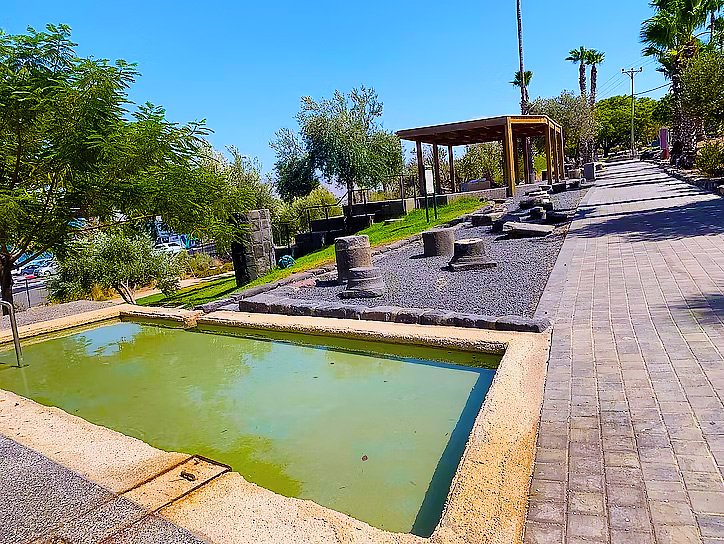
Right at the southern edge of town on the western lakeshore, Hamat Tiberias holds one of the most spectacular ancient synagogue mosaics in Israel — a zodiac floor from the Mishnaic–Talmudic period — alongside the hot springs the city was built around. Seventeen thermo-mineral springs surface here at about 60°C, and an elegantly preserved 18th-century Turkish hammam and an antiquities hall round out the site.
A sheer cliff rising ~390 m above the lake with the widest view in the Galilee — out to the Golan and Mt. Hermon. A cliffside cave-fortress you descend with handholds, the ruins of a 4th-century synagogue, and trails on the Jesus Trail and Israel National Trail.
An ancient Talmudic-era town on the hillside above the northern shore, about 4 km from Capernaum, centered on a magnificent black-basalt synagogue — a different stone and feel from the lake's other ruins.
The impressive remains of a Byzantine monastery and church on the eastern shore — by Christian tradition, the site of the Miracle of the Swine. One of the largest Byzantine monastic complexes found in the region.
Where the Golan's streams pour into the lake, the Majrase offers a short wading water-trail you walk through the river itself — the area's best escape on a hot day, and a favorite with families.
The lakeside pier and gateway to the northern shore's churches and sacred sites, with an ancient synagogue among the ruins of the town central to the Gospels.
A Greco-Roman city on a flat-topped hill on the Golan slopes east of the lake, opposite Kibbutz Ein Gev — ruined streets, churches and gates with a commanding view back across the water.
Hours shift by season and close early on Fridays. Reserve entry and check current times on the official Nature & Parks Authority site before you go.